PERSPECTIVE
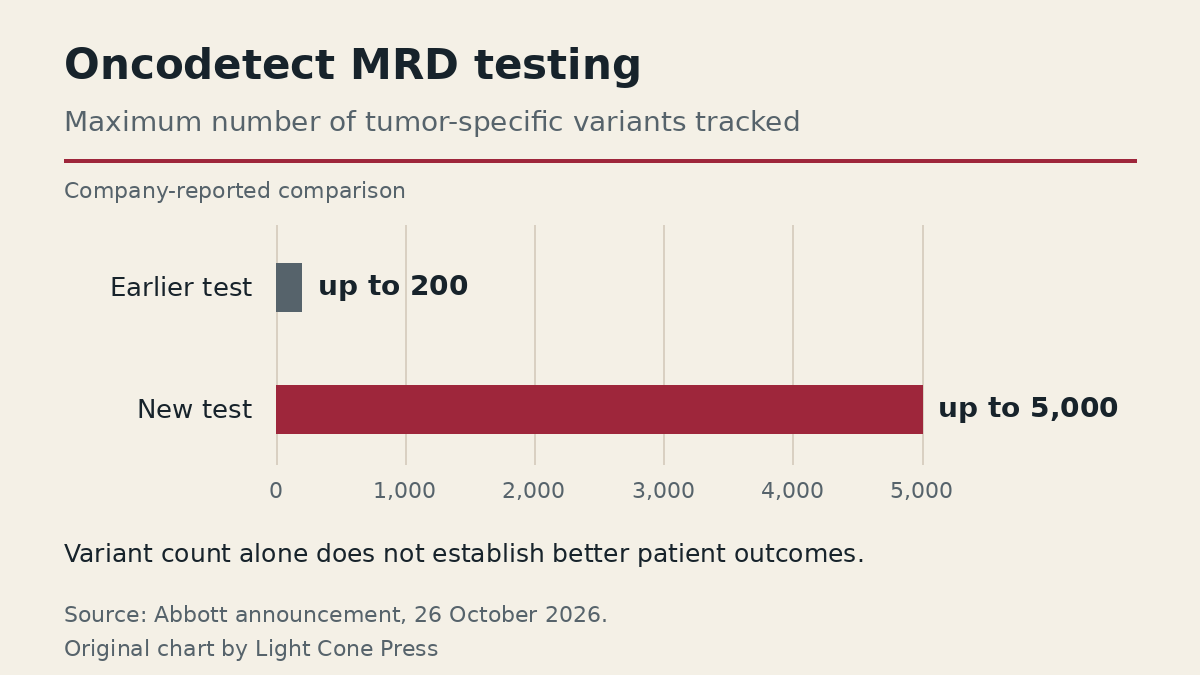
Abbott's October 26 Oncodetect launch expands tumor-informed residual-disease testing from up to 200 tracked variants to as many as 5,000. The company reports detection below one part per million under high-input conditions.
Following smaller cancer signals could broaden the situations in which testing is informative. The consequential question is what a physician can do with the result. Clinical value will depend on whether earlier detection supports an action that improves outcomes, alongside turnaround time and economics. The launch is worth following as a test of that connection between analytical performance and clinical decisions.
Abbott states that the assay has not been FDA cleared or approved. The detection figure is an analytical claim under specified input conditions.
ORIGINAL SOURCES